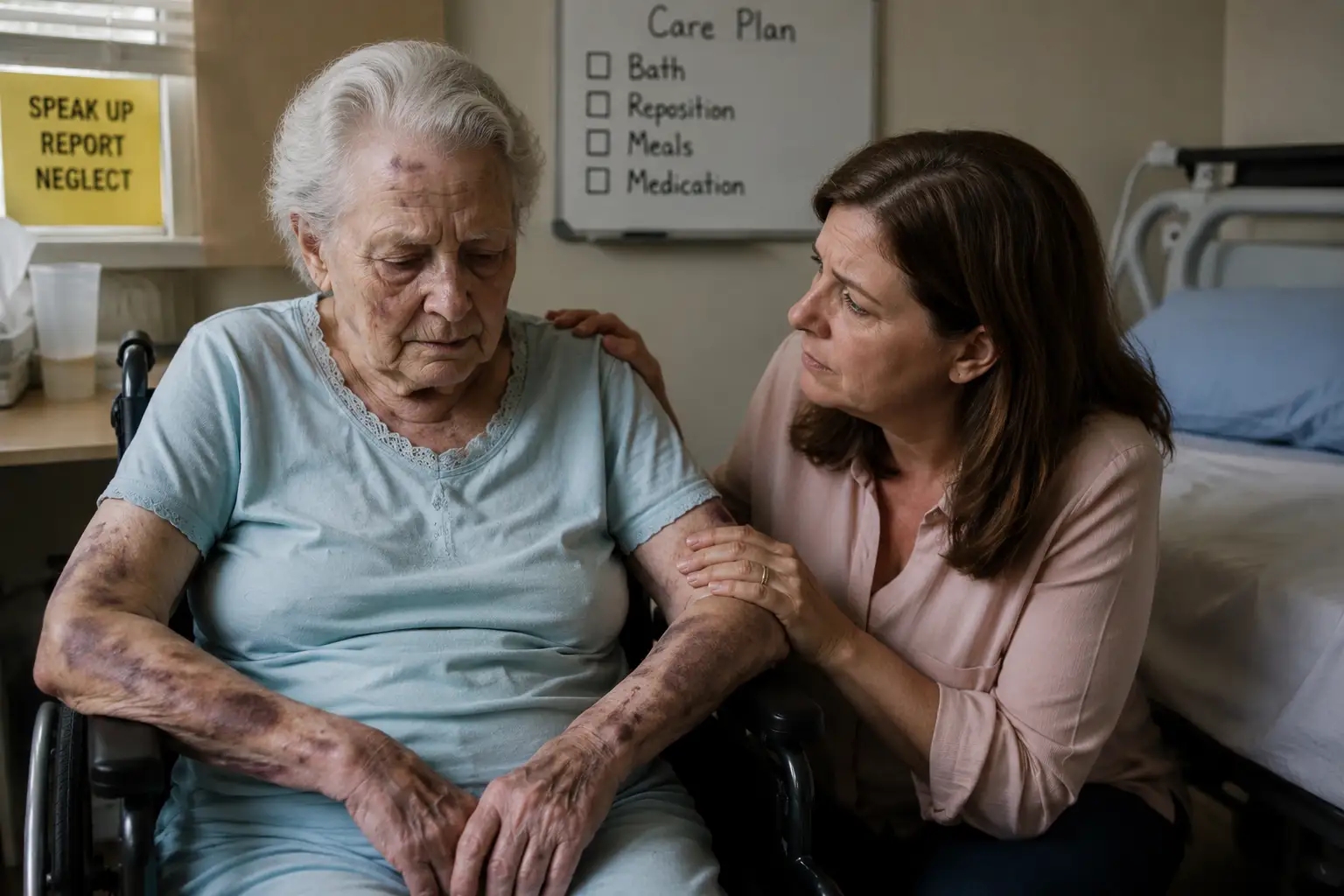

When you place a loved one in a nursing home, you are placing enormous trust in that facility and its staff. Most families make that decision with enormous care, often after months of research and difficult conversations. That trust, however, does not guarantee that a loved one is receiving the care they deserve.
According to the CDC, abuse, including neglect and exploitation, is experienced by about 1 in 10 older adults, and many cases go unreported because victims are afraid or unable to speak up. Nursing home residents are among the most vulnerable members of that population, which means the responsibility for recognizing the warning signs often falls entirely on families.
What Are the Most Common Signs of Nursing Home Neglect?
Neglect in a nursing home setting refers to a facility’s failure to provide the basic standard of care a resident requires. It is not always visible or reported by the resident. The following are warning signs that families should take seriously and investigate immediately.
Bedsores (pressure ulcers) are among the most telling indicators of neglect. They develop when a resident is left in the same position for extended periods without being repositioned, which is a basic and required caregiving task. Stage two or higher bedsores in a nursing home resident are widely considered a red flag for inadequate supervision and care.
Malnutrition and dehydration can develop when staff fail to ensure residents are eating and drinking adequately. Signs include sudden and unexplained weight loss, dry skin, cracked lips, confusion, and extreme fatigue. These conditions are preventable with proper monitoring and are serious enough to cause lasting organ damage or death.
Unexplained injuries such as bruising, fractures, or lacerations that staff cannot or will not explain clearly deserve immediate attention. While some injuries can result from falls, a pattern of unexplained injuries or injuries that do not match the explanation offered by staff warrants serious scrutiny.
Poor hygiene, including unwashed hair, soiled clothing, unchanged bedding, or persistent body odor, suggests that basic personal care is being neglected. Residents who are unable to attend to their own hygiene depend entirely on staff to do so.
Sudden behavioral changes such as increased withdrawal, new anxiety, fearfulness around specific staff members, or unexplained depression can indicate that something has changed in how a resident is being treated. These changes are especially significant because many nursing home residents with cognitive impairments cannot communicate abuse or neglect directly.
What Is the Difference Between Nursing Home Abuse and Neglect?
Understanding the distinction matters for families trying to assess what may be happening to their loved one.
Abuse refers to intentional, harmful acts directed at a resident. This includes physical violence, verbal or emotional cruelty, sexual misconduct, and financial exploitation. Abuse requires a deliberate act on the part of a caregiver or another party.
Neglect, by contrast, refers to the failure to provide care, whether through inaction, understaffing, poor training, or institutional indifference. A resident who develops severe bedsores because no one repositioned them has not necessarily been physically harmed on purpose, but the facility has still failed in its legal duty of care.
Both abuse and neglect can cause serious physical and psychological harm. Both can give rise to legal claims. And both are far more common than most families realize when they first place a loved one in a facility’s care.
What Should Families Do If They Suspect Neglect?
Document everything. Begin keeping a detailed written record of what you observe during every visit. Note dates, times, the names of staff you speak to, the condition of your loved one, and any specific concerns. Photographs of bedsores, injuries, or unsanitary conditions can be critical evidence later.
Speak with facility management. Raise your concerns directly with the nursing home’s director of care or administration. Note how they respond, whether they take your concerns seriously, and what steps they commit to taking. Keep written records of those conversations as well.
Report to the appropriate authorities. Suspected nursing home neglect can be reported to state regulatory agencies that oversee long-term care facilities. In Michigan, families can contact Adult Protective Services through the Department of Health and Human Services or call the state’s elder abuse hotline. In Illinois, similar reporting options exist through the Illinois Department on Aging. Regulatory agencies have the authority to investigate facilities and, in serious cases, mandate changes or close them.
Contact an attorney. If you believe your loved one has suffered harm due to neglect, speaking with an experienced nursing home abuse attorney is an important step. A qualified attorney can evaluate what happened, explain your legal options, and help you understand whether a civil claim is appropriate. Our firm handles nursing home abuse and neglect cases and offers a free, confidential consultation to families who have concerns. For broader injury-related claims arising from neglect, including wrongful death, our personal injury practice provides experienced representation.
Who Can Be Held Legally Responsible for Nursing Home Neglect?
When neglect harms a nursing home resident, responsibility does not always rest with a single individual. Depending on the facts of the situation, multiple parties may bear legal liability.
The facility and its ownership bear a fundamental duty to ensure adequate staffing, proper training, and a safe environment for every resident. When systemic failures, chronic understaffing, or institutional indifference contribute to neglect, the facility and its owners can be held accountable.
Individual staff members who directly fail in their duty of care to a resident may face personal liability in addition to the facility’s liability, depending on the circumstances and the nature of the harm caused.
Third-party contractors who provide services within a nursing home, including medical service providers, therapy contractors, or staffing agencies, may also bear responsibility if their negligence contributed to a resident’s injuries.
Identifying all responsible parties is a critical part of building a strong legal claim, which is one reason to work with experienced trial attorneys who understand the full scope of nursing home litigation.
Find Nursing Home Abuse Legal Help in Detroit or Chicago
Families dealing with suspected nursing home neglect should not have to navigate the legal system alone. Attorney Arnold E. Reed is a nationally recognized trial lawyer and faculty member at Harvard Law School’s Trial Advocacy Workshop, with decades of experience in complex litigation and a record of multi-million-dollar verdicts and settlements for clients across Michigan and beyond. At Arnold E. Reed & Associates, P.C., we represent individuals and families who have been failed by the institutions entrusted with their loved ones’ care.
If you believe your loved one has suffered harm due to nursing home neglect, we encourage you to reach out as early as possible. Time limits apply to legal claims, and early action preserves evidence and options.
We offer a free, confidential consultation to families who have concerns about nursing home neglect or abuse. There is no obligation and no fee unless we win your case. Contact Arnold E. Reed & Associates, P.C. to speak directly with our team and get a clear picture of your legal options.
Newsletter
Stay Updated
Subscribe to receive the latest news and insights directly to your inbox.